The True Cost of a Lower Monthly Payment
August 28, 2026 • 7 min read
A lower monthly payment can feel like a win, but extending the repayment period often means paying much more overall. Learn what that payment is really costing you.
A lower monthly payment can feel like a win.
Whether you are financing a car, taking out a personal loan, refinancing a mortgage, or consolidating debt, reducing the amount you owe each month can make your budget feel more manageable.
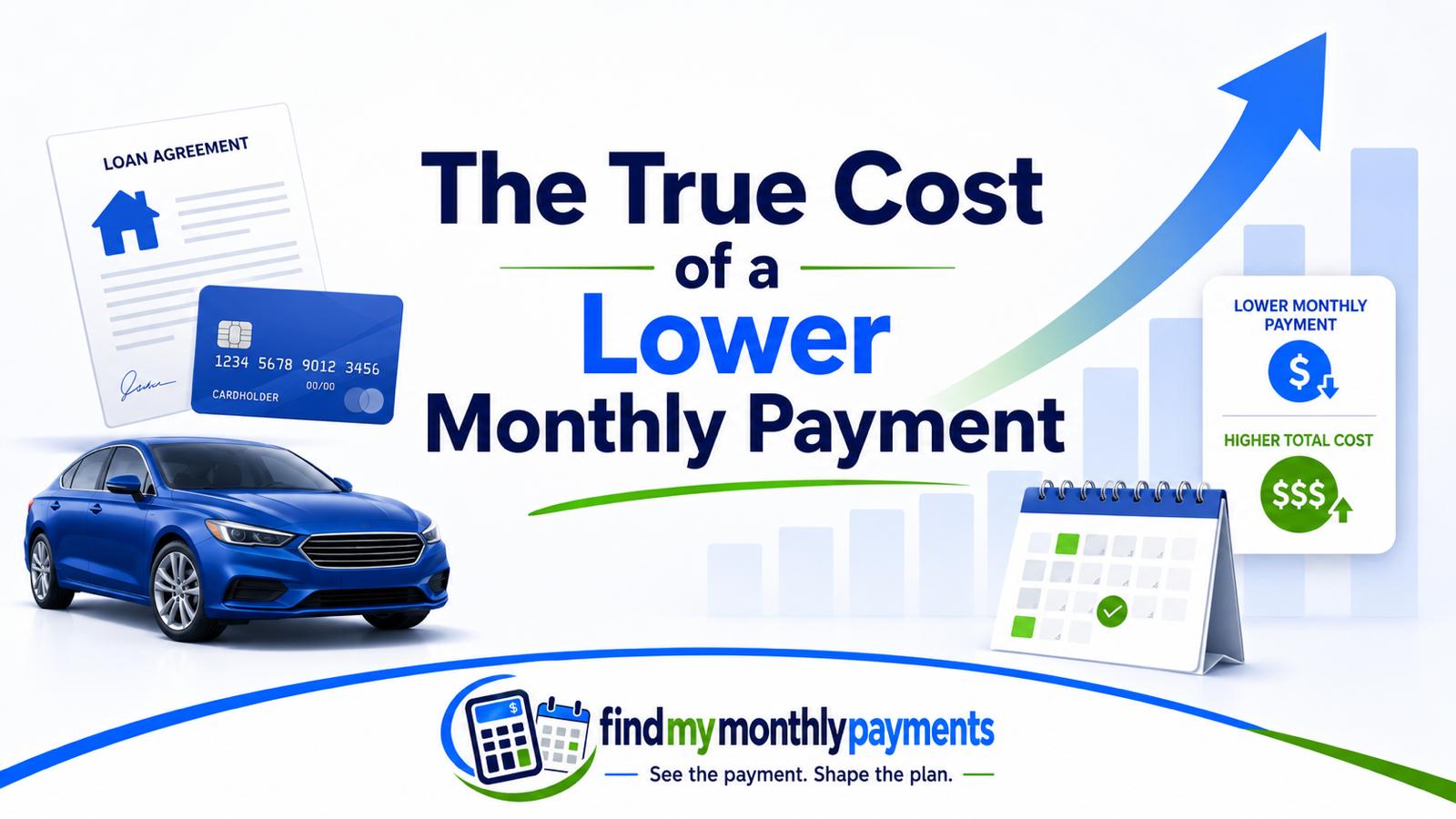
But there is an important tradeoff many borrowers overlook: A lower monthly payment can sometimes mean paying much more overall.
That is because lenders often lower payments by extending the repayment period. While this can reduce your immediate monthly obligation, it may also increase the amount of interest you pay over time.
Before choosing the lowest payment available, it helps to understand what that payment is really costing you.
Why Lower Payments Can Be Misleading
Monthly payment is one of the first numbers people look at when comparing loans.
That makes sense. Your monthly payment directly affects your budget.
But focusing only on that number can hide the bigger picture.
Two loans can have very different total costs even if one appears more affordable each month.
The key factors usually include:
- Loan amount
- Interest rate
- Loan term
- Fees
- Total interest paid
A longer term usually lowers the monthly payment because the balance is spread across more months.
The downside is that interest has more time to accumulate.
Example: A Longer Auto Loan
Imagine you finance a vehicle for $30,000 at the same interest rate but choose between two different repayment terms.
The shorter loan may come with a higher monthly payment.
The longer loan may feel easier because the monthly payment is lower.
However, the longer loan could result in significantly more interest paid over the life of the loan.
That means you may save money each month while spending more overall.
This is one reason it is important to compare both the monthly payment and the full repayment cost before choosing an auto loan. A FindMyMonthlyPayments Auto Loan Calculator can help you compare different loan amounts, rates, and terms before making a decision.
Mortgage Payments Work the Same Way
The same principle applies to mortgages.
A longer repayment term can reduce the amount you owe each month, but it may increase the total interest you pay over the life of the loan.
This becomes especially important when comparing mortgage options or considering a refinance.
For example, refinancing into a new long-term loan may reduce your current payment, but restarting the repayment clock can sometimes increase your total borrowing cost.
A lower mortgage payment can still be worthwhile if it helps improve cash flow or allows you to meet other financial goals. The important thing is to understand the tradeoff.
Use a Mortgage Payment Calculator or Refinance Calculator to compare the monthly payment with the long-term cost.
Personal Loans Can Create the Same Trap
Personal loans are often marketed by monthly payment.
A lender may offer several repayment terms, and the longest option may appear the most attractive because it has the lowest payment.
But extending the loan term can make a relatively small debt much more expensive.
Before accepting a personal loan, compare:
- Monthly payment
- Interest rate
- Number of payments
- Total amount repaid
If your budget allows, choosing a shorter term may reduce the amount of interest you pay.
Credit Card Minimum Payments Are an Extreme Example
Credit cards show how expensive a low payment can become.
Minimum payments are intentionally small relative to the balance.
While that makes the required monthly payment manageable, paying only the minimum can cause repayment to stretch for years.
Interest continues to accumulate while the balance declines slowly.
As a result, purchases can end up costing substantially more than their original price.
Increasing your monthly credit card payment—even modestly—can sometimes reduce both your payoff time and your total interest expense. A Credit Card Payoff Calculator can help you see the difference.
When a Lower Monthly Payment Can Make Sense
A lower payment is not always a bad choice.
There are situations where reducing monthly obligations can be useful.
For example, a lower payment may help you:
- Build an emergency fund
- Pay down higher-interest debt
- Manage a temporary income change
- Increase retirement contributions
- Improve monthly cash flow
The key is knowing what you are giving up in exchange.
If a lower payment costs thousands of dollars more in interest, you should understand that before committing.
Sometimes paying more overall is worth the flexibility. Other times, the lower payment simply makes an expensive purchase look more affordable than it really is.
Look at the Total Cost, Not Just the Payment
When comparing loans, ask more than: "What will my payment be?"
Also ask: "How much will this cost me in total?"
Those two numbers can tell very different stories.
A slightly higher monthly payment may allow you to repay a loan years sooner and save a meaningful amount of money.
On the other hand, a lower payment may give you the breathing room you need in your budget.
There is no single answer that works for everyone. The goal is to make the decision with the full picture in front of you.
The Bottom Line
Monthly payments matter, but they are only one part of the cost of borrowing.
A lower payment may feel more affordable today, but a longer repayment period can make the loan more expensive over time.
Before choosing a loan based on the monthly payment alone, compare the interest rate, repayment term, and total amount you will repay.
Running the numbers before you borrow can help you decide whether a lower monthly payment is truly saving you money—or simply delaying the cost.
FindMyMonthlyPayments.com offers free financial calculators designed to help you estimate monthly payments, compare loan scenarios, and understand the potential cost of borrowing before you commit.
This article is for informational and educational purposes only and should not be considered financial, investment, tax, or legal advice. Calculator results are estimates and may vary based on actual rates, fees, taxes, and other factors.