
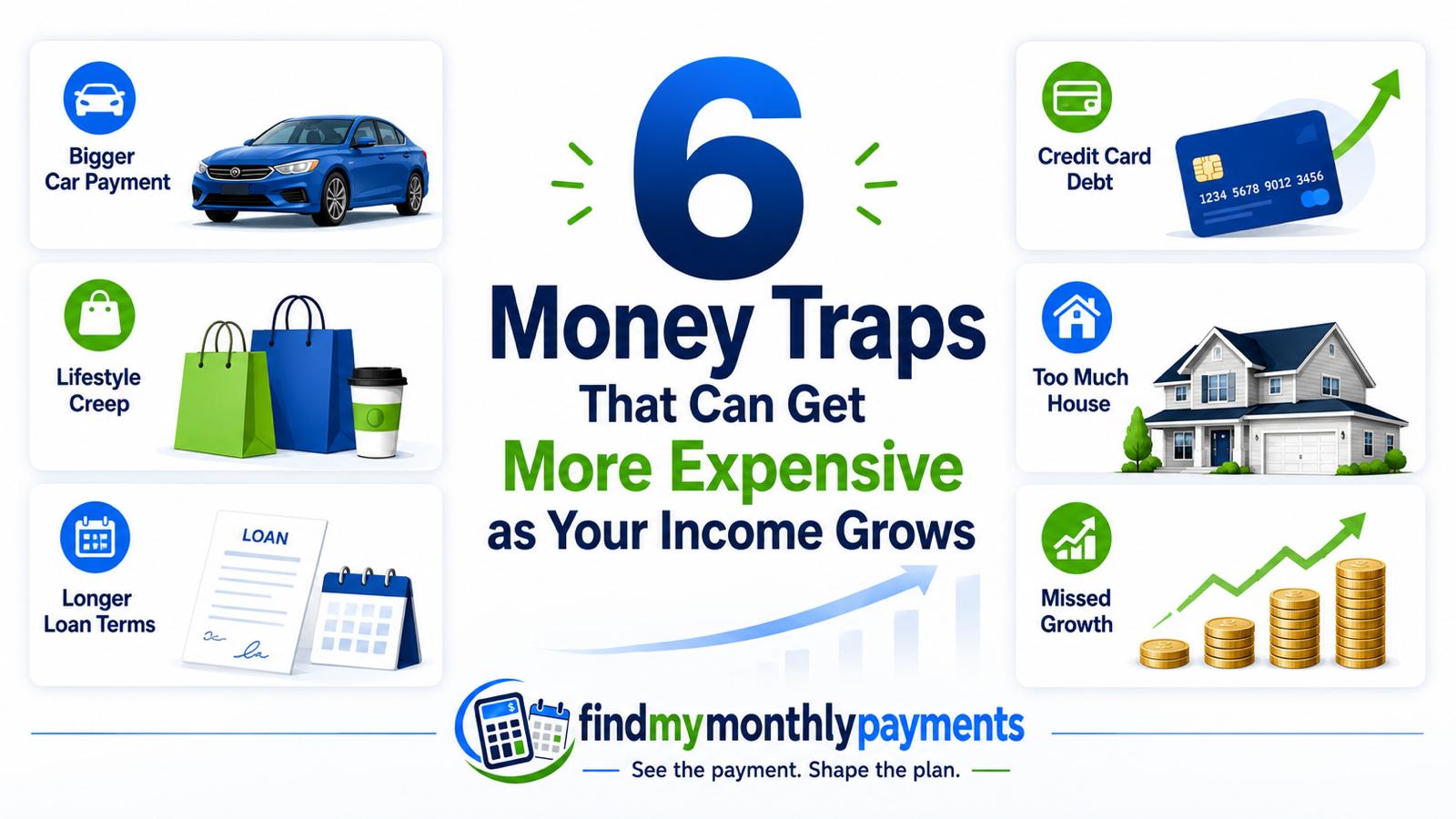
Money Traps That Can Get More Expensive as Your Income Grows
August 30, 2026 • 8 min read
Higher income can make larger payments feel affordable, but recurring obligations can quietly slow your financial progress. Here are six common money traps to watch for.
Earning more money should make life easier. But higher income can also make it easier to take on larger payments, spend more casually, and overlook financial habits that quietly slow down your progress.
The problem is not always how much you earn. Often, it is how much of that income gets locked into recurring monthly obligations.
Here are six common money traps to watch for as your income and lifestyle grow.
1. Taking On a Bigger Car Payment Than You Need
As income rises, it can be tempting to upgrade to a more expensive vehicle simply because the monthly payment feels affordable.
But a higher car payment does more than reduce your checking account balance each month. It can also limit how much you are able to save, invest, pay toward debt, or put toward other goals.
A payment that seems manageable today can also become uncomfortable if your income changes or another major expense appears.
Before buying, look beyond the sticker price and calculate the full monthly cost of the loan. Use the FindMyMonthlyPayments Auto Loan Calculator to compare different loan amounts, interest rates, and repayment terms before committing.
2. Letting Lifestyle Creep Become Permanent
Lifestyle creep happens when your spending increases along with your income.
A nicer apartment, more subscriptions, frequent dining out, expensive vacations, upgraded technology, and premium services may each seem reasonable on their own. Together, they can consume most of the additional income you worked hard to earn.
The danger is that many of these expenses become recurring monthly commitments.
If you receive a raise, consider increasing your savings or investment contributions before increasing your spending. That allows your lifestyle to improve while still protecting your financial progress. A monthly budget can help you see how much of your income is truly available after fixed and discretionary expenses.
3. Stretching Loan Terms Just to Lower the Payment
A lower monthly payment can make a purchase look more affordable, but it does not always make it less expensive.
Longer repayment terms often mean paying significantly more interest over the life of a loan.
For example, extending an auto loan or personal loan by several years may reduce the monthly payment while increasing the total amount you ultimately pay.
Before choosing a loan based only on the monthly number, compare both the payment and the total interest cost. Sometimes a slightly higher monthly payment can save thousands of dollars over time.
4. Carrying Credit Card Debt Because You Can Afford the Minimum
Higher earners are not immune to credit card debt.
In fact, a larger paycheck can sometimes make revolving balances feel less urgent because minimum payments are easy to cover.
But high credit card interest rates can make balances grow quickly, especially when new purchases are added each month. Paying only the minimum can stretch repayment over many years and dramatically increase the total cost of what you originally purchased.
Use a Credit Card Payoff Calculator to estimate how long repayment could take and how much interest you may pay under different monthly payment amounts. Increasing your payment even modestly can sometimes make a major difference.
5. Buying More House Than Your Budget Can Comfortably Handle
Qualifying for a certain mortgage amount does not necessarily mean you should borrow the maximum.
Housing costs extend beyond principal and interest. Homeowners may also need to account for property taxes, insurance, homeowners association fees, utilities, maintenance, repairs, and other expenses.
A large mortgage payment can reduce your financial flexibility even if your income is relatively high.
Before purchasing a home, calculate what the monthly payment would look like at different home prices, down payments, mortgage rates, and loan terms. The goal should not simply be to determine what you can qualify for. It should be to determine what payment fits comfortably within your overall financial plan.
6. Forgetting What Your Money Could Earn Instead
Every additional monthly payment creates an opportunity cost.
An extra $300 going toward a car upgrade, subscription bundle, or unnecessary loan payment is $300 that cannot be saved or invested elsewhere.
Over time, that difference can become significant because invested money has the potential to compound. For example, regularly investing a few hundred dollars per month over many years can potentially grow into a substantial amount depending on investment returns.
This does not mean you should never spend money on things you enjoy. It simply means larger financial decisions should be considered alongside what that money could accomplish elsewhere. A Compound Interest Calculator or Investment Return Calculator can help illustrate the long-term difference.
The Bottom Line
Making more money is valuable, but keeping control of your monthly obligations is just as important.
A higher income can create more financial freedom, but only if your expenses do not rise just as quickly.
Before taking on a new loan, upgrading your lifestyle, or adding another recurring payment, ask yourself a simple question: How will this monthly payment affect everything else I want my money to do?
Running the numbers before making a decision can help you understand the real cost and avoid turning higher income into higher financial stress.
FindMyMonthlyPayments.com offers free financial calculators designed to help you estimate monthly payments, compare financial scenarios, and make more informed money decisions.
This article is for informational and educational purposes only and should not be considered financial, investment, tax, or legal advice. Calculator results are estimates and may vary based on actual rates, fees, taxes, and other factors.